
Tracking Your Lawn: The Hidden Problem That Can Ruin Healthy Turf
When it comes to lawn maintenance, there are plenty of things to watch for—whether you're mowing your own yard or making sure your lawn care provider is delivering quality work. One of the most overlooked issues we see is tracking.
What Is Lawn Tracking?
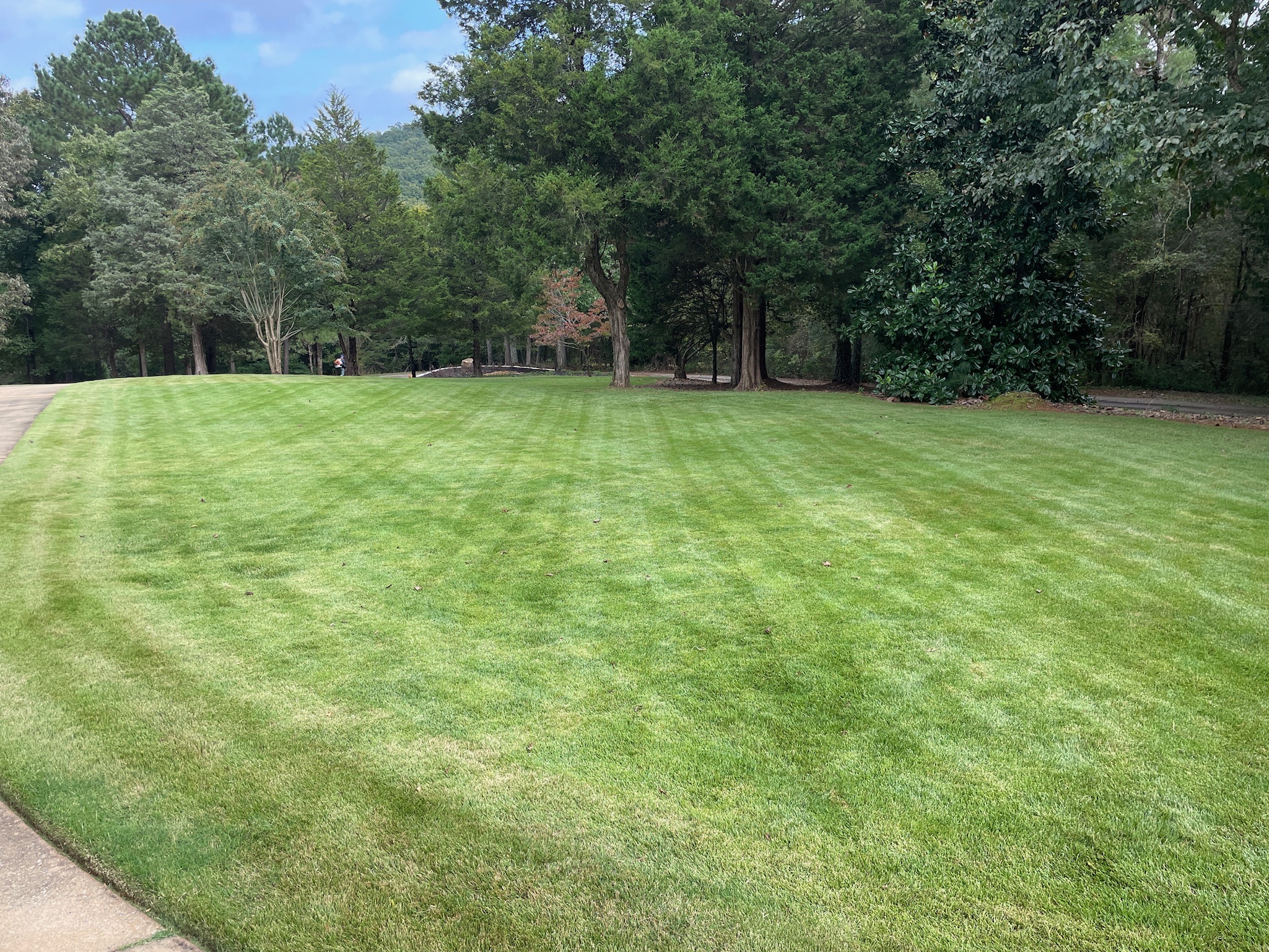
Tracking is the visible tire patterns, ruts, or changes in the lawn's elevation caused by repeated mower traffic. Over time, mowing the exact same path week after week compacts the soil and creates permanent wheel tracks.
This problem is especially common in:
- Shaded areas that stay damp longer
- Low spots with poor drainage
- Lawns that rarely have time to fully dry between mowings
When the same tire paths are used repeatedly, the turf never has a chance to recover. Instead of developing deep, healthy roots, the grass becomes shallow-rooted and weak. Eventually, you'll notice thin, spotty areas that struggle to thrive.
The Thatch Problem
There's another downside to mowing the same direction every visit: excessive thatch buildup.
Grass naturally leans in the direction it's mowed. When this happens repeatedly, clippings and organic material accumulate instead of standing up to be cut cleanly. Over time, that layer of thatch thickens, reducing the amount of oxygen, water, nutrients, and sunlight that can reach the soil and root system.
The result is a lawn that's less healthy, less resilient, and more susceptible to disease and drought stress.
The Solution: Rotate Your Mowing Pattern
At Green South, we believe healthy lawns require more than simply cutting the grass.
One of the best practices is establishing a four-point mowing pattern. Instead of mowing the same direction every week, rotate between four different directions throughout the season.
Changing the mowing pattern:
- Prevents soil compaction from repeated wheel traffic
- Encourages upright grass growth
- Reduces thatch buildup
- Promotes deeper, stronger root development
- Creates a healthier, more attractive lawn
While this approach takes more time, it's worth it. Many lawn care companies avoid rotating patterns because it requires additional turns, repositioning equipment, and sometimes changing mower sizes. Those extra minutes add labor, but they also produce noticeably better results.
Don't Forget the Final Lap
Another important practice is what we call the final lap.
After the main mowing pattern is complete, make one final pass around the property's perimeter. There are two great ways to do this:
- Make a double final lap, which offsets the wheel tracks from previous passes.
- Use a push mower around the perimeter to eliminate heavy mower traffic altogether.
This simple step greatly reduces visible tracking while improving the overall appearance of the lawn.
It Also Reduces Scalping
Tracking doesn't just leave tire marks—it can also lead to scalping.
As wheel ruts develop, mower decks can't float and flex the way they're designed to. Instead, the blades dip into the low spots, cutting the grass far too short and creating unsightly brown patches.
By rotating mowing patterns and minimizing repeated wheel traffic, you reduce rut formation and help prevent scalping before it starts.
Quality Lawn Care Is About More Than Cutting Grass
Anyone can mow a lawn. The difference between average lawn maintenance and professional lawn care is understanding how today's mowing practices affect the health of your turf months and even years down the road.
At Green South, we don't just cut grass—we manage turf for long-term health. Rotating mowing patterns, minimizing tracking, and protecting your lawn from unnecessary compaction are all part of delivering a greener, healthier landscape that looks its best every week.